Process Electrification
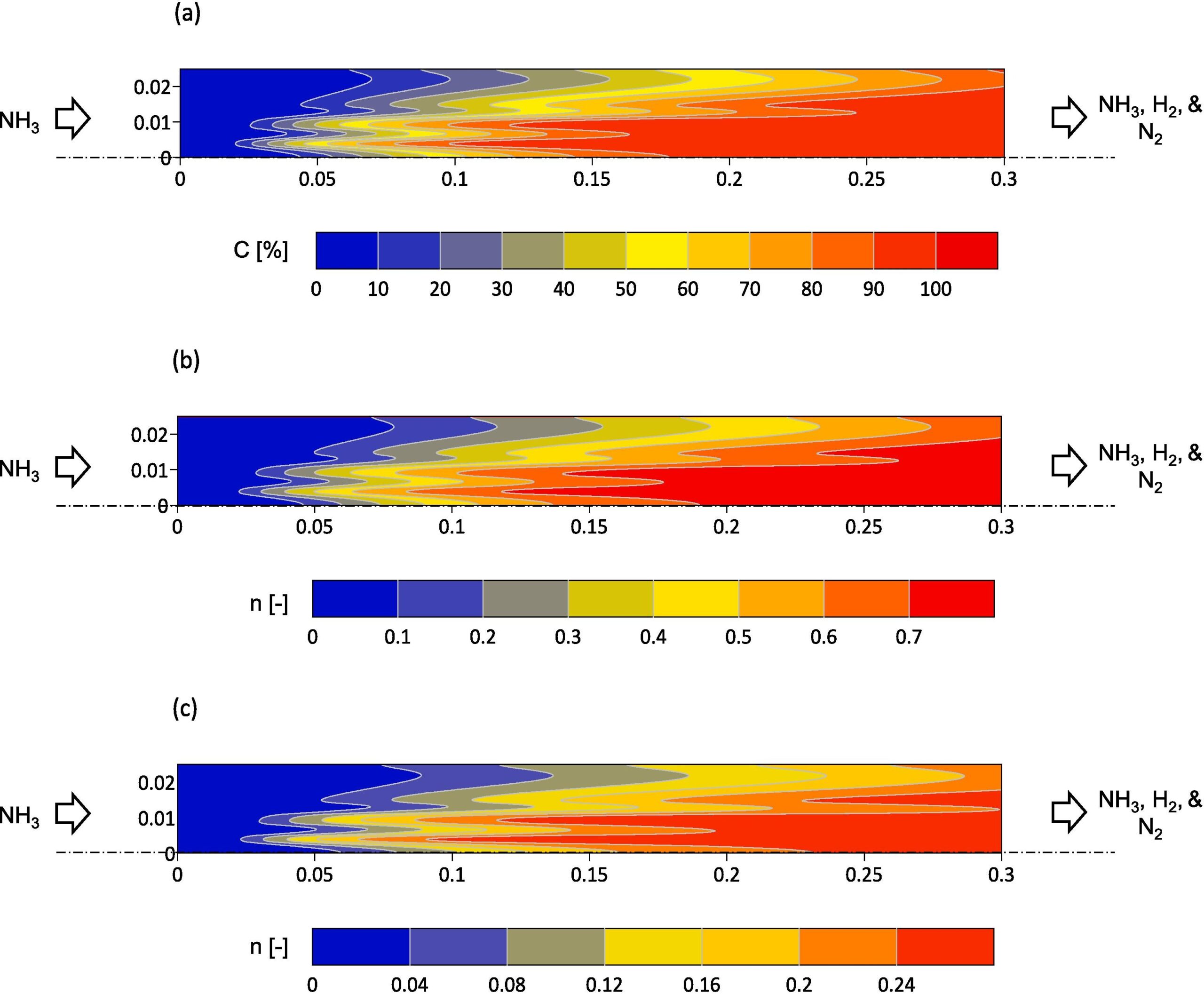
This project investigated electrified ammonia cracking as a low-carbon hydrogen supply solution for hydrogen refueling stations, focusing on replacing fossil-based heating with electric power.
Methods Used
CFD reactor modeling with multiple heater configurations
ASPEN Plus process simulation for system integration
Multi-objective optimization (NSGA-II, TOPSIS, Bayesian methods)
Comparative assessment of:
Natural gas heating
Gray, blue, and green electricity
Techno-economic and life cycle analysis
Key Results
Electrification with gray electricity increased cost and emissions
Green electricity reduced emissions to 3.5 kg-CO₂/kg-H₂ by 2050
Multi-concentric porous heaters improved energy efficiency
Achieved 4% higher NH₃ conversion and 45% reduction in heating demand


Modeling & Design of Thermally enhanced Systems
This project focused on computational fluid dynamics (CFD) modeling of chemically reacting systems to analyze reactor performance, heat and mass transfer, and reaction kinetics under realistic operating conditions.
Methods
CFD modeling of heterogeneous and homogeneous chemical reactions
Coupling of reaction kinetics with transport phenomena (mass, momentum, energy)
Simulation of fixed-bed, packed-bed, and catalytic reactors
Parametric studies on temperature, pressure, flow rate, and catalyst configuration
Key Results
Quantified the impact of hydrodynamics on conversion and selectivity
Identified temperature hot spots and mass-transfer limitations
Demonstrated performance improvements through reactor and catalyst optimization
Conclusion
The work demonstrates how CFD-based reactor modeling can be used as a powerful tool for reactor design, scale-up, and process optimization, reducing experimental cost and development time.


Membrane Separation Process
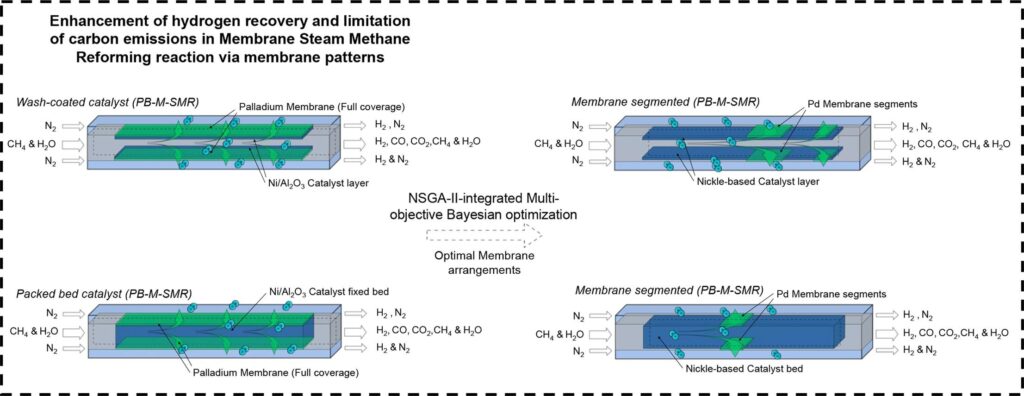
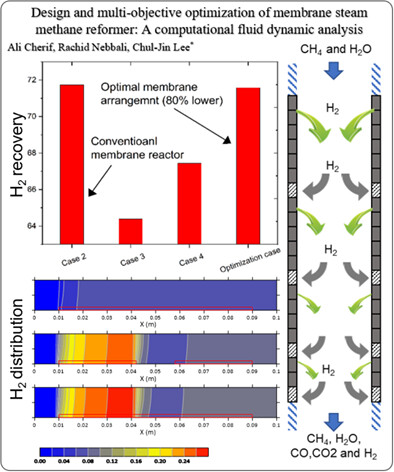
This project cluster focused on intensifying chemical reactions using membrane separation to enhance efficiency and reduce emissions.
Methods Used
CFD modeling of SMR, ATR, and membrane reactors
Langmuir–Hinshelwood and power-law kinetics
Wash-coated vs packed catalyst comparison
Pd-based hydrogen separation membranes
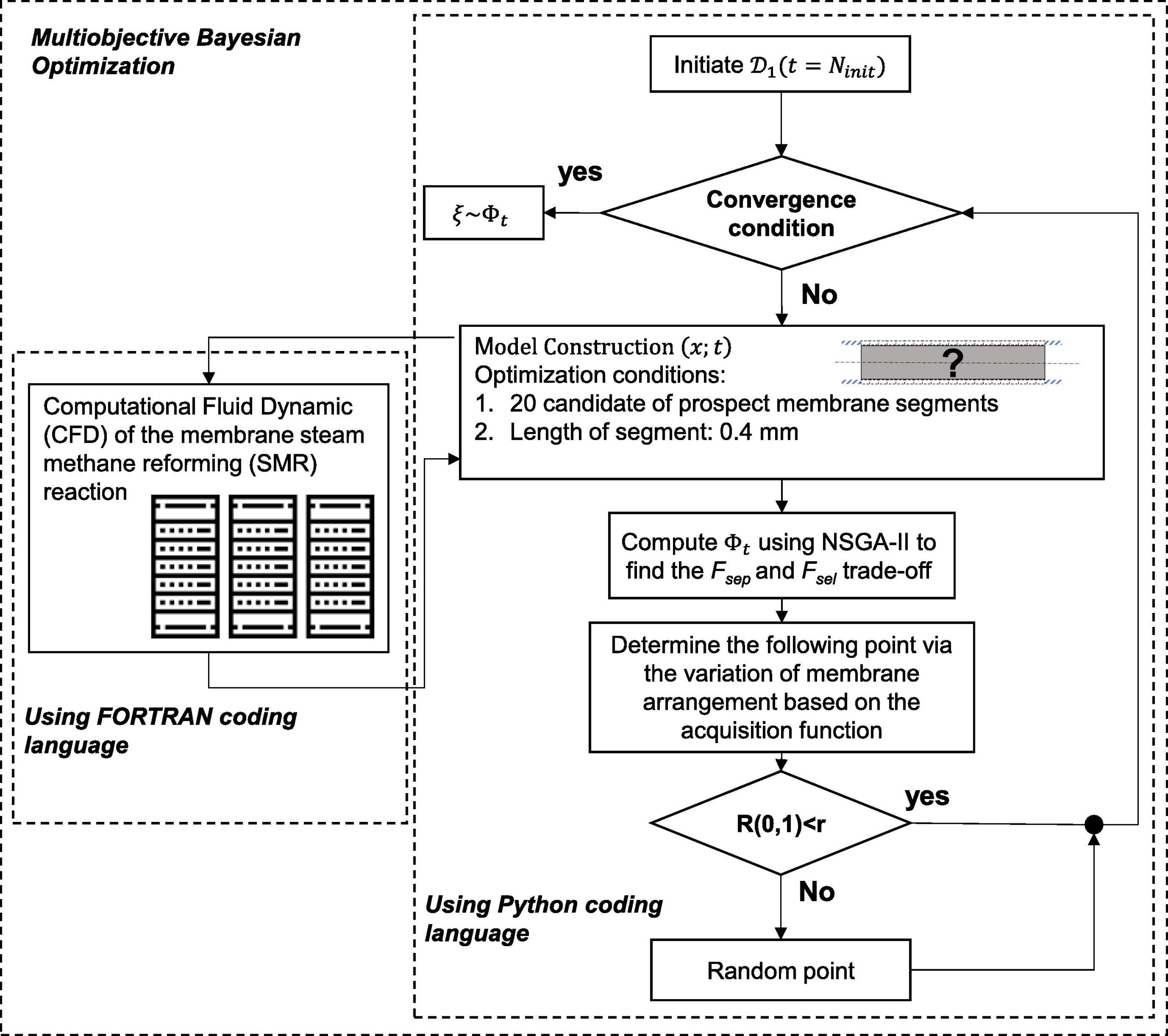
Multi-objective optimization for emissions reduction
Key Results
Metal foams reduced peak temperature by >45%
Hydrogen yield improved while maintaining reactor compactness
Membrane SMR reduced CO₂ selectivity by 36.6%
Catalyst configuration strongly influenced thermal stability
Conclusion
Process intensification using metal foam and membrane reactors significantly improves production efficiency while lowering carbon emissions, supporting transitional and low-carbon hydrogen strategies.
Chemicals and Heat Storage & Transportation

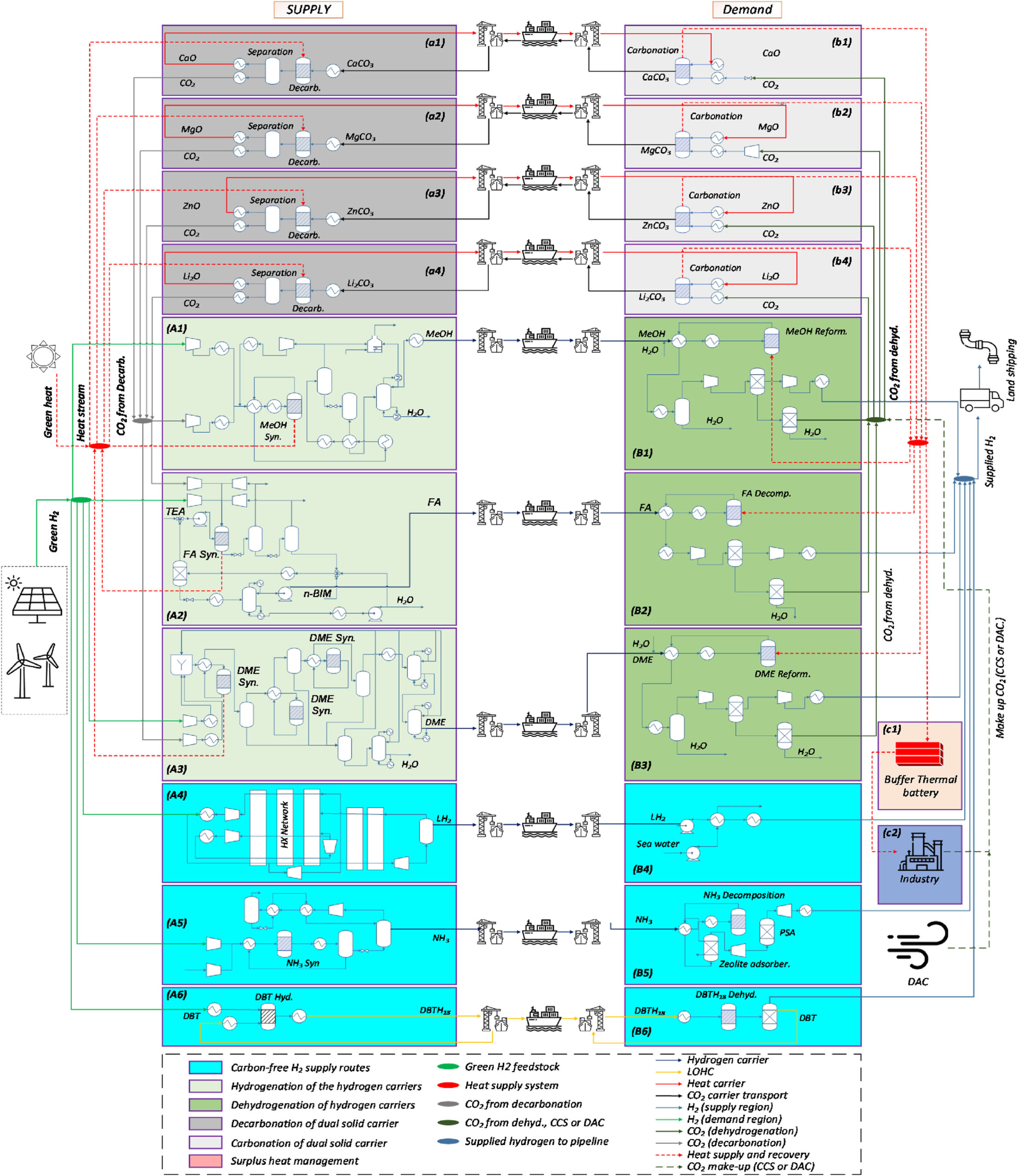
This project addressed the cost and carbon intensity of global hydrogen transportation by integrating dual CO₂ and heat looping carriers into existing hydrogen supply chains.
Methods Used
Large-scale techno-environmental-economic analysis
Evaluation of hydrogen carriers:
LH₂, NH₃, methanol, formic acid, DME
Integration of metal oxide looping materials (ZnO, CaO, Li₂O, MgO)
2050 future scenario analysis with DAC and renewable heat
Key Results
Methanol-ZnO route reduced CI by 46%
Achieved 0.7 kg-CO₂/kg-H₂ in 2050 scenario
Transportation cost reduced to 4.6 USD/kg-H₂
Closed-loop CO₂/heat systems significantly outperformed conventional routes
Conclusion
The project demonstrates that hybrid CO₂/heat looping enables affordable, scalable, and ultra-low-carbon hydrogen transportation, unlocking global hydrogen trade.
Hydrocarbons Processing & CO2 sequestration

This project addressed the cost and carbon intensity of global hydrogen transportation by integrating dual CO₂ and heat looping carriers into existing hydrogen supply chains.
Methods Used
Large-scale techno-environmental-economic analysis
Evaluation of hydrogen carriers:
LH₂, NH₃, methanol, formic acid, DME
Integration of metal oxide looping materials (ZnO, CaO, Li₂O, MgO)
2050 future scenario analysis with DAC and renewable heat
Key Results
Methanol-ZnO route reduced CI by 46%
Achieved 0.7 kg-CO₂/kg-H₂ in 2050 scenario
Transportation cost reduced to 4.6 USD/kg-H₂
Closed-loop CO₂/heat systems significantly outperformed conventional routes
Conclusion
The project demonstrates that hybrid CO₂/heat looping enables affordable, scalable, and ultra-low-carbon hydrogen transportation, unlocking global hydrogen trade.
Process Design, Integration & Optimization
These projects focused on the process design, integration, and optimization of sustainable energy systems for low-carbon hydrogen production, transportation, and utilization, including carbon capture and utilization (CCU), electrified ammonia decomposition, and in-situ hydrocarbon combustion pathways.
Methods
- Techno-economic assessment (TEA) and life cycle assessment (LCA) of CCU pathways to chemicals (e.g., acetic acid, formic acid)
- Process simulation and multi-objective optimization (e.g., NSGA-II, TOPSIS) for electrified ammonia cracking reactors (e.g., multi-concentric porous heaters)
- Thermodynamic modeling (Gibbs free energy minimization) and in-situ sorption strategies using nanoparticles (e.g., CaO) for enhanced hydrogen yield in subsurface combustion
- Comparative analysis of hydrogen carriers and closed-loop CO₂/heat integration for overseas transportation chains
- Integration of renewable electricity scenarios (gray, blue, green) and sensitivity to raw material sources
Key Results
- Ranked CCU products with acetic acid, formic acid, and calcium formate as top sustainable options based on a novel sustainable feasibility index
- Achieved up to 49–300% higher hydrogen yields via CaO sorption in in-situ combustion, with significant CO₂ and H₂S reduction
- Demonstrated ammonia decomposition configurations reducing carbon intensity by up to 8.2% and costs to ~10.7 USD/kg-H₂ with green electricity in 2050 projections
- Enabled low-carbon hydrogen transport (e.g., MeOH-ZnO route) with CI as low as 0.7 kgCO₂-eq/kgH₂ and costs down to 4.6 USD/kgH₂ in future scenarios
Conclusion
The work advances feasible, integrated decarbonization strategies for hydrogen ecosystems, confirming technical and economic viability of optimized CCU, electrification, and looping systems to support net-zero energy transitions.
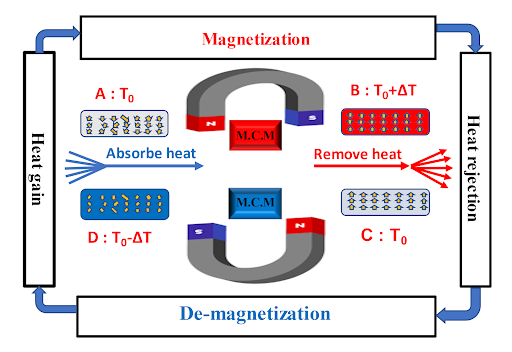
Magnetocaloric Effect for Refregeration Processes
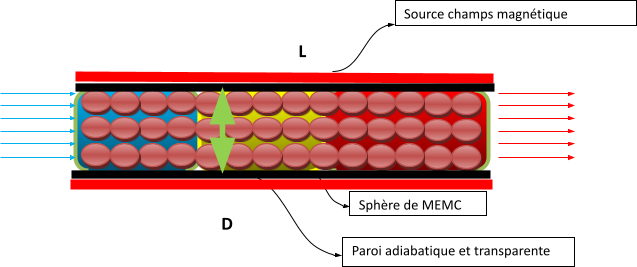
This project focused on the numerical modeling and performance optimization of magnetocaloric refrigeration systems, a solid-state and environmentally friendly alternative to conventional vapor-compression cooling.
Methods
Physics-based modeling of the magnetocaloric effect
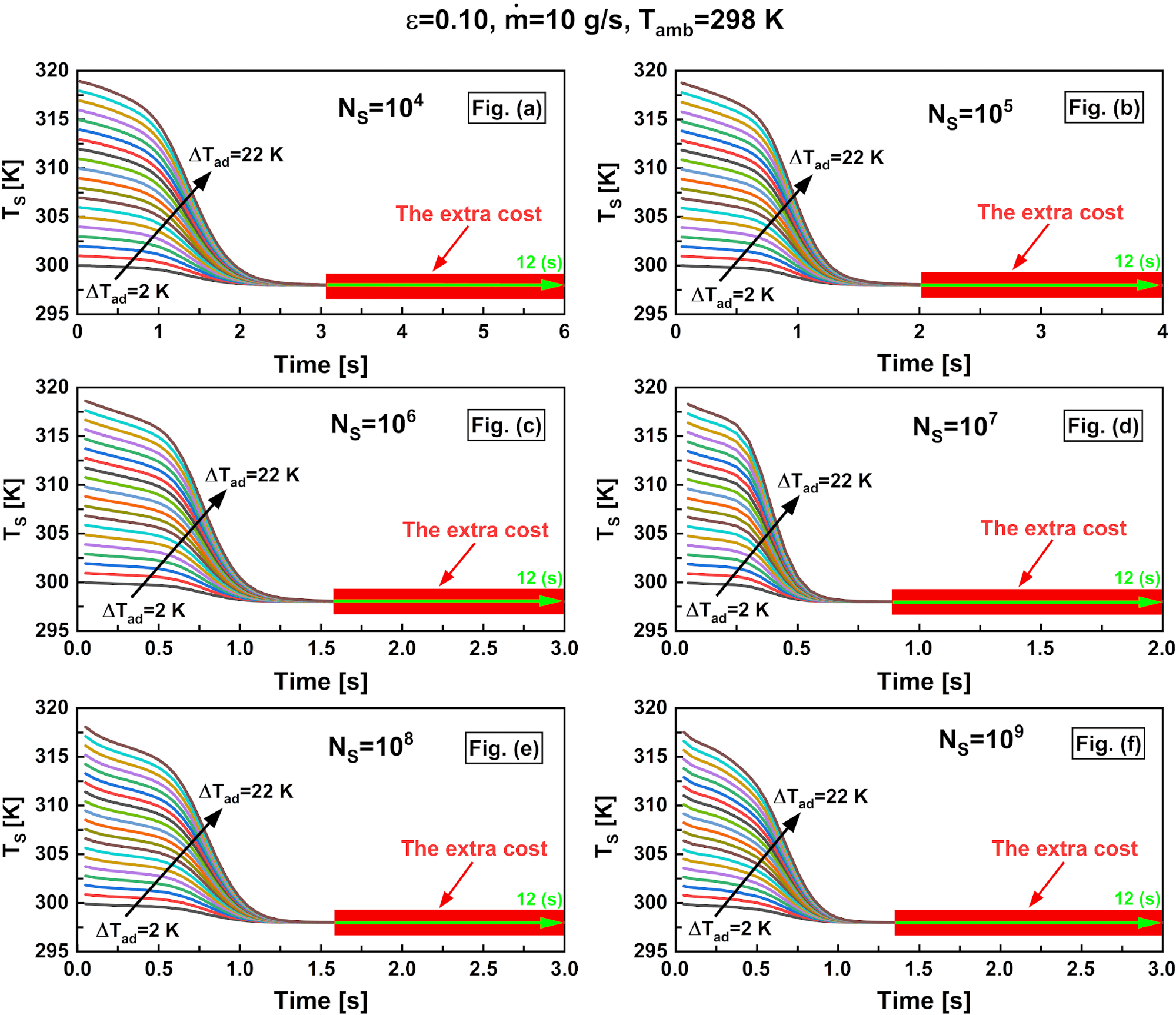
Transient heat transfer analysis of the active magnetic regenerator (AMR)
Finite-difference numerical solution
Parametric analysis of magnetic field strength, operating frequency, and regenerator properties
Key Results
Predicted temperature span generation during magnetization cycles
Identified operating conditions maximizing cooling performance
Demonstrated competitive efficiency under optimized design parameters
Conclusion
The study confirms the technical viability of magnetocaloric refrigeration and provides a modeling framework for design optimization of low-carbon cooling systems.